Spine Condition
Herniated Disc
A herniated disc can cause back pain, nerve irritation and symptoms that may extend into the leg or arm. Understanding the condition and receiving an appropriate assessment can help guide the next steps in care.
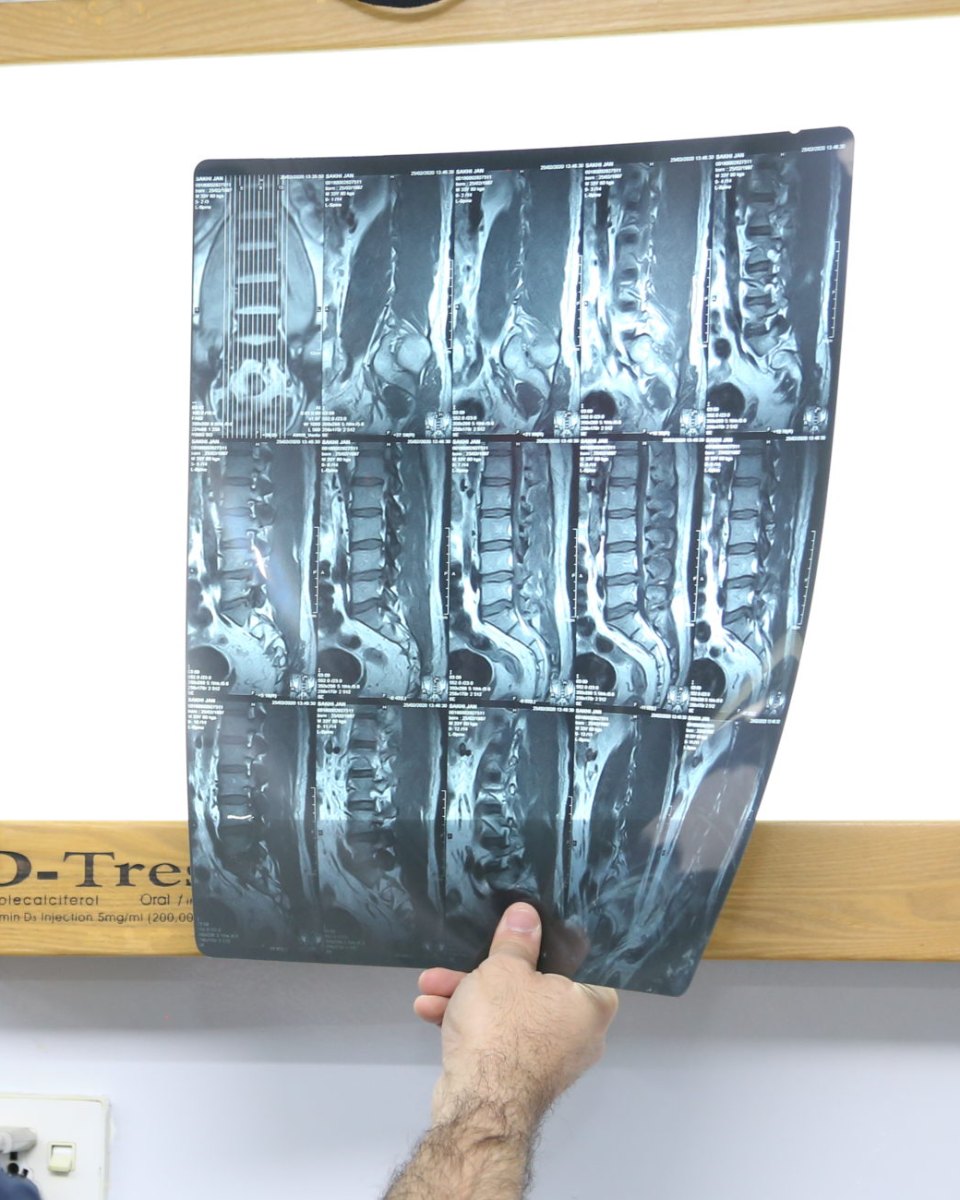
Spine · Disc
Specialist assessment
Hayatabad Medical Complex
Condition
Herniated Disc
Specialty
Spine Care
Focus
Assessment & Management
Location
Peshawar
Anatomy at a glance
The intervertebral disc
Vertebrae
The bones of the spine.
Nucleus pulposus
The soft, gel-like centre of each disc.
Annulus fibrosus
The tough outer ring surrounding it.
Also known as: slipped · ruptured · bulging disc
Understanding the Condition
What Is a Herniated Disc?
Between the bones of the spine sit the intervertebral discs. Each disc has a soft, gel-like centre surrounded by a tough outer ring, and together they act as cushions that help the spine move and absorb load.
A disc herniation happens when the core of the disc bulges out through the outer layer that surrounds it. The condition is often associated with a deep, sharp pain that can come on suddenly, and pain travelling into the arms or legs is common.
Herniated discs most often occur in the lower back (lumbar spine) and can also occur in the neck (cervical spine).
Recognising It
Common Symptoms
Symptoms depend on where the affected disc is and whether it is pressing on a nearby nerve.
Not everyone experiences every symptom, and some people have no symptoms at all.
Pain
In the lower back or neck. It may be deep and sharp and can start suddenly.
Pain that travels
Into the buttock and leg (often called sciatica), or into the shoulder and arm.
Numbness or tingling
In the area supplied by the affected nerve, such as part of the leg, foot, arm or hand.
Weakness
In the muscles of the leg, foot, arm or hand, which may affect walking, lifting or grip.
Causes & Risk Factors
Why Does It Happen?
Most herniated discs are linked to gradual wear. Over time, discs lose some of their water content and flexibility, and the outer ring can become more prone to tearing.
Factors that may contribute
- Gradual, age-related wear of the discs
- Lifting, bending or twisting movements that strain the back
- Repetitive, physically demanding work
- Excess body weight
- Smoking
- A family tendency to disc problems
Often, no single cause can be identified.
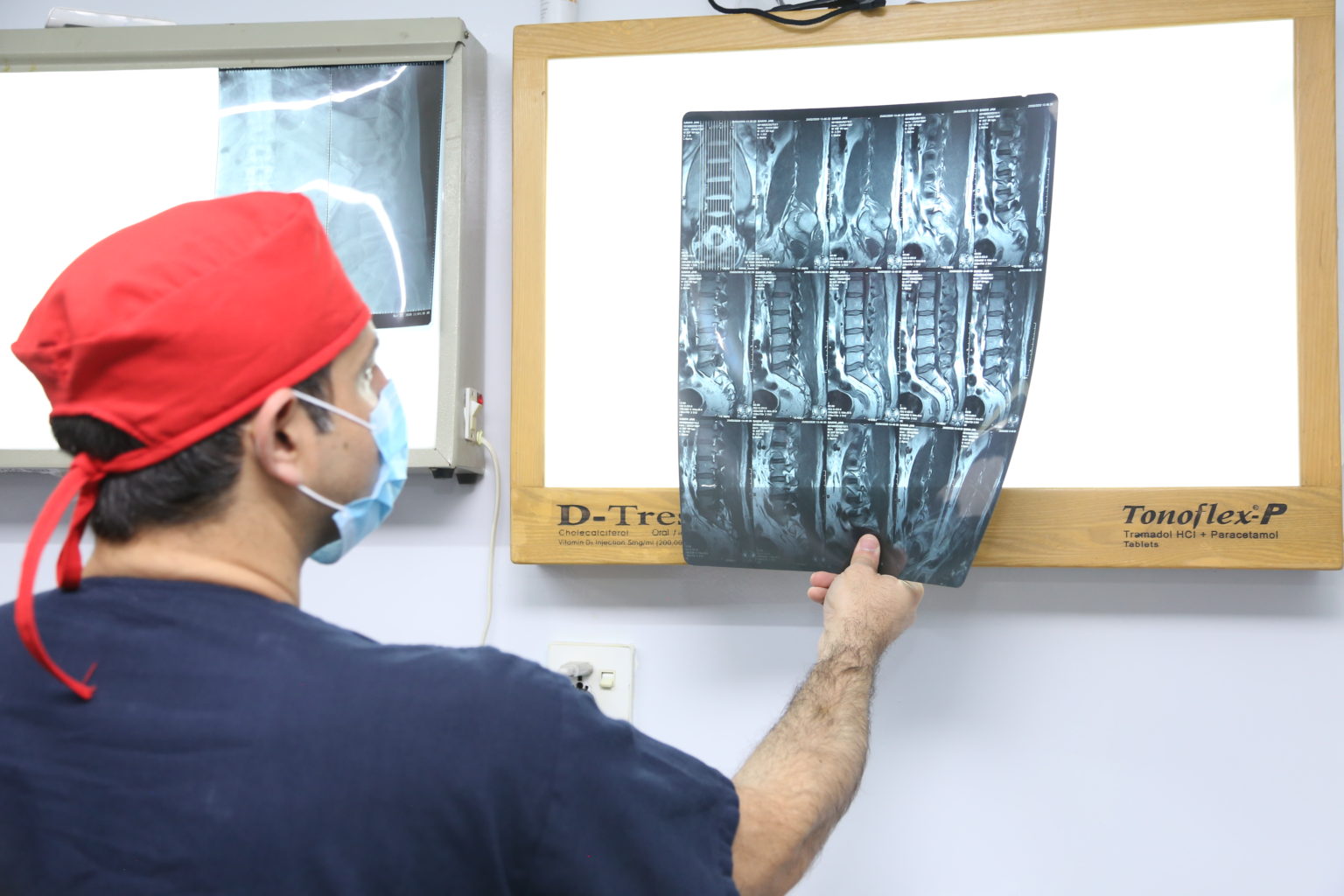
Reviewing spinal MRI imaging
Clinical Process
Assessment & Diagnosis
Assessment of a suspected herniated disc may include the following. The appropriate tests are decided on an individual basis.
History
A discussion of your symptoms, when they started and what makes them better or worse.
Clinical Examination
Checking movement, reflexes, muscle strength and sensation.
Imaging Where Appropriate
An MRI scan is commonly used to show the discs and nerves in detail. Other imaging or tests may be considered depending on the findings.
Discussion of Findings
Your assessment and the options appropriate to your situation are explained and discussed with you.
Care & Management
Treatment & Management
Treatment depends on the severity of symptoms, examination findings and the underlying cause.
General Patient Information
Management may range from conservative approaches to specialist intervention where appropriate.
For many people, symptoms improve over a period of weeks with non-surgical care. Conservative management can include a period of modified activity, pain relief advised by a doctor, and guided exercise or physiotherapy.
Where symptoms persist, are severe, or nerve function is affected, a specialist can discuss further options.
At the Clinic
Following assessment, your findings and the options appropriate to your situation will be discussed with you, and an individual treatment plan agreed.
Understanding the condition is the first step toward appropriate care.
Operating theatre

Specialist Care
Care With a Specialist Focus
Dr. Samir Kabir is an orthopedic and spine surgeon whose clinic is at Hayatabad Medical Complex, Peshawar.
His training includes nine years of surgical training and work in the United Kingdom, the FCPS in Orthopaedics & Trauma, and fellowship training in spine surgery.
MBBS · MRCS · MPH · FCPS Orthopaedics & Trauma
Spine Surgery Fellowship
Patient Guidance
When to Seek Specialist Care
Consider seeing a specialist if:
- Back or neck pain has not improved after a few weeks
- Pain spreads into the leg or arm
- You have numbness, tingling or weakness
- Pain is affecting your sleep, work or daily activities
Important Information
When Urgent Assessment May Be Needed
Contact emergency services or go to the nearest emergency department immediately if back pain is accompanied by loss of bladder or bowel control, difficulty passing urine, numbness around the genitals or buttocks, or weakness in both legs that is getting worse. These can be signs of serious nerve compression that needs immediate assessment.
This page provides general information and is not a substitute for a personal medical consultation.
Spine Care
Related Spine Conditions
Questions
Frequently Asked Questions
General answers to common questions. Your own situation should always be discussed with a specialist.
Is a herniated disc the same as a slipped disc?
These terms are often used interchangeably in everyday language. Despite the name, the disc does not actually slip out of place — the soft centre pushes out through the tougher outer layer of the disc.
Why can a disc problem in the back cause pain in the leg?
If disc material presses on or irritates a nearby nerve, pain, numbness or tingling may be felt along the path of that nerve — for example down the leg (often called sciatica) or, for discs in the neck, into the arm.
Can a herniated disc improve without surgery?
For many people, symptoms improve over a period of weeks with non-surgical care. The right approach depends on your symptoms and examination findings, which is why an individual assessment is important.
Do I always need an MRI scan?
Not always. Whether imaging is needed depends on your symptoms and examination. When imaging is appropriate, an MRI scan is commonly used because it shows the discs and nerves in detail.
When should I seek urgent help?
Seek emergency care immediately if back pain is accompanied by loss of bladder or bowel control, difficulty passing urine, numbness around the genitals or buttocks, or worsening weakness in both legs.
Private Consultation
Discuss Your Condition With Dr. Samir Kabir
If you have symptoms that may be related to a disc problem, you are welcome to arrange a consultation at the clinic.
Clinic hours
Monday – Saturday · 4:00 PM – 8:30 PM
Hayatabad Medical Complex, Peshawar
Phone & WhatsApp