Spine Care · Condition Guide
Spondylolisthesis
Spondylolisthesis occurs when one vertebra slips forward on the one below it. Some people have no symptoms, while others develop back pain, leg pain or nerve symptoms.
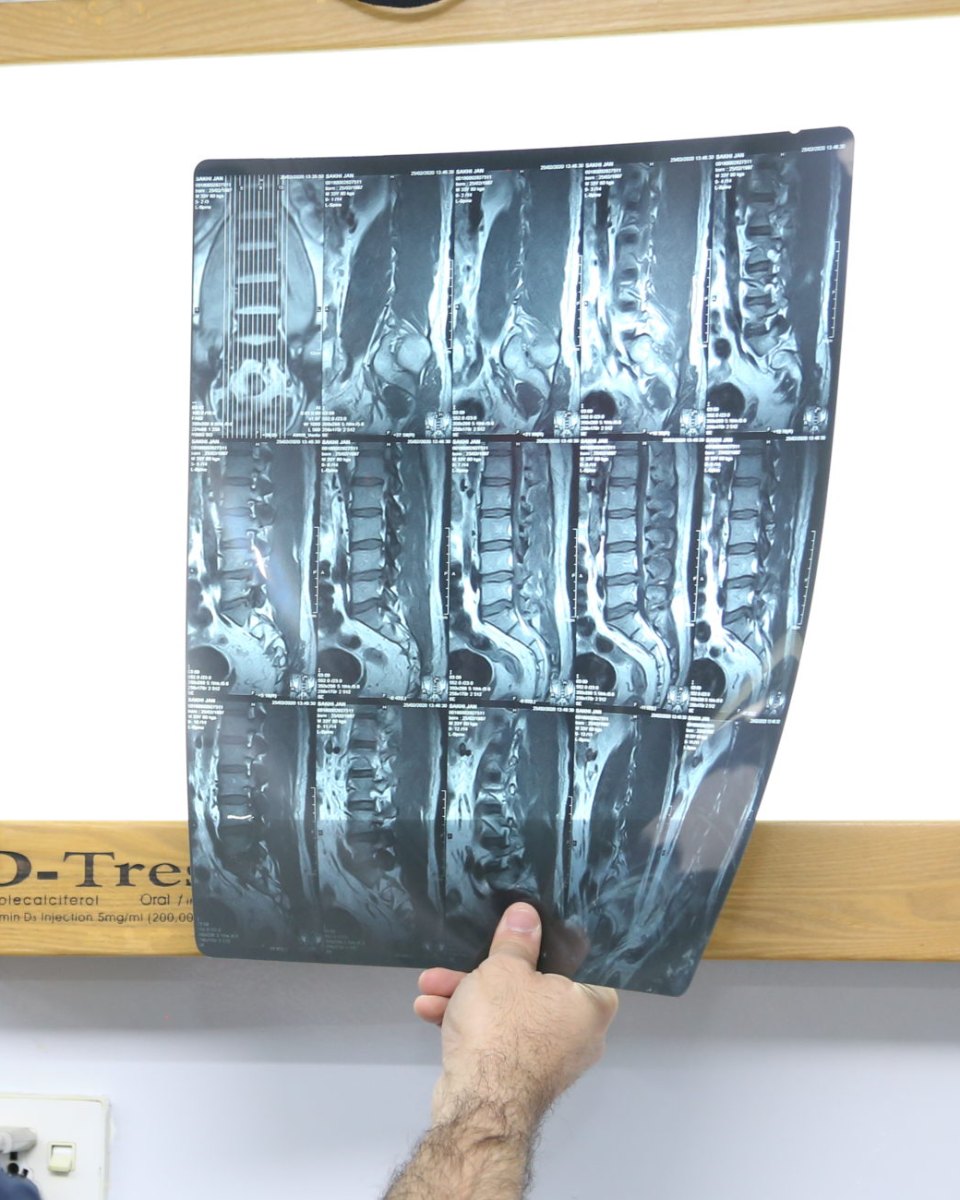
Spine · Alignment
Specialist assessment
Hayatabad Medical Complex
Condition
Spondylolisthesis
Specialty
Spine Care
Focus
Assessment & Management
Location
Peshawar
Anatomy at a glance
When a vertebra slips
Vertebrae
The stacked bones of the spine, normally held in alignment.
Forward slip
One vertebra moves forward relative to the one beneath it.
Spinal canal
The slip can narrow the space for the nerves.
It most commonly affects the lower (lumbar) spine.
Understanding the Condition
What Is Spondylolisthesis?
Spondylolisthesis is a condition in which one vertebra slips forward on the adjacent vertebra.
It may be present from birth, or it may develop as a result of physical stress on the spine or age-related degeneration. Over time it can produce a gradual deformity of the lower spine and a narrowing of the spinal canal.
This can lead to back pain, leg pain and other symptoms, although some people with spondylolisthesis have few or no symptoms.
Recognising It
Common Symptoms
Symptoms depend on the degree of slippage and whether nerves are affected.
Lower Back Pain
Pain in the lower back, which may worsen with activity or standing.
Leg Pain
Pain spreading into the buttocks or legs if a nerve is irritated.
Tightness
Tightness in the hamstrings or stiffness in the lower back.
Numbness or Weakness
Tingling, numbness or weakness in the legs in some cases.
Causes & Risk Factors
Why Does It Happen?
Spondylolisthesis can develop for different reasons.
Factors that may contribute
- A condition present from birth (congenital)
- Repeated physical stress on the spine, sometimes linked to sport
- Age-related degeneration of the discs and joints
- A stress fracture in part of the vertebra
- Injury to the spine
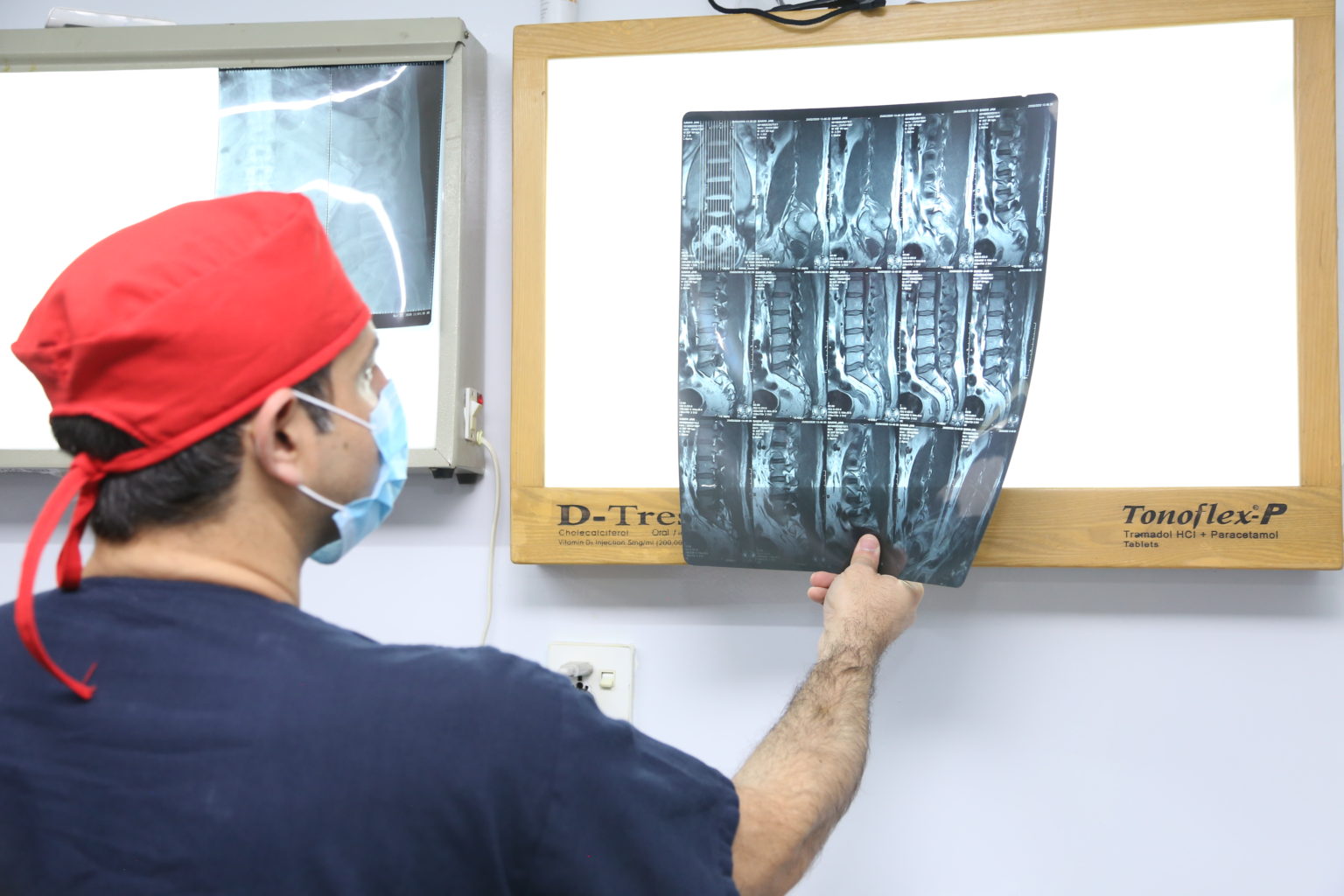
Clinical review of imaging
Clinical Process
Assessment & Diagnosis
Diagnosis is based on a careful clinical assessment. Imaging is used where it is likely to help answer a specific question about your condition.
History
A detailed discussion of your symptoms, how and when they began, what makes them better or worse, and how they affect daily life.
Clinical Examination
Examination of the spine, posture, movement and, where relevant, nerve function such as strength, sensation and reflexes.
Imaging Where Appropriate
X-ray, MRI or CT may be requested when the findings suggest it would be useful. Not every patient needs a scan.
Discussion of Findings
Your findings are explained in clear terms, including what they mean and which options may be appropriate.
Care & Management
Treatment & Management
Management depends on symptoms, the degree of slippage and whether nerves are involved.
General Patient Information
Many people with spondylolisthesis are managed without surgery. General approaches can include activity advice, physiotherapy and exercises to strengthen the core and support the spine, and medication for pain relief where appropriate.
Surgical treatment, which may involve stabilising the affected level, may be considered when symptoms are severe or persistent, when there is significant nerve involvement, or when the slip is progressing.
At the Clinic
Following assessment, your findings and the options appropriate to your situation will be discussed with you, and an individual treatment plan agreed.
Each case is assessed individually, taking symptoms and imaging into account.
Spine Care · Peshawar

Specialist Care
Care With a Specialist Focus
Dr. Samir Kabir is an orthopedic and spine surgeon whose clinic is at Hayatabad Medical Complex, Peshawar.
His training includes nine years of surgical training and work in the United Kingdom, the FCPS in Orthopaedics & Trauma, and fellowship training in spine surgery.
MBBS · MRCS · MPH · FCPS Orthopaedics & Trauma
Spine Surgery Fellowship
Patient Guidance
When to Seek Specialist Care
Consider seeing a specialist if:
- Lower back pain persists or keeps returning
- Pain spreads into the buttocks or legs
- You notice numbness, tingling or weakness in the legs
- Walking or standing is becoming difficult
Important Information
Some symptoms need urgent care
Seek urgent medical attention if you develop new numbness around the groin or buttocks, difficulty controlling your bladder or bowel, or rapidly worsening weakness in the legs. These symptoms need same-day emergency assessment.
This page provides general information and is not a substitute for a personal medical consultation.
Related Conditions
Other Spine Conditions
Questions
Frequently Asked Questions
General answers to common questions. Your own situation should always be discussed with a specialist.
Can spondylolisthesis be present without symptoms?
Yes. Some people have spondylolisthesis found incidentally on imaging and have few or no symptoms.
Will the slip get worse?
In many people it remains stable. Monitoring may be advised in some cases, particularly in younger patients or when symptoms change.
Does it always need surgery?
No. Many people are managed without surgery. Surgery may be considered for persistent or severe symptoms or nerve involvement.
Can young people get spondylolisthesis?
Yes. It can occur in young people, sometimes related to repetitive stress on the spine during sport.
How is it diagnosed?
Diagnosis is based on your history and examination, with X-ray or other imaging used to assess alignment where appropriate.
Private Consultation
Discuss Your Condition With Dr. Samir Kabir
A specialist assessment can help clarify the cause of your symptoms and the options appropriate for you.
Clinic hours
Monday – Saturday · 4:00 PM – 8:30 PM
Hayatabad Medical Complex, Peshawar
Phone & WhatsApp