Spine Care · Condition Guide
Spinal Stenosis
Spinal stenosis is a narrowing of the spinal canal that can put pressure on the nerves. It often develops gradually and may cause pain, numbness or heaviness in the legs when walking.
Spine · Canal
Specialist assessment
Hayatabad Medical Complex
Condition
Spinal Stenosis
Specialty
Spine Care
Focus
Assessment & Management
Location
Peshawar
Anatomy at a glance
How the canal narrows
Spinal canal
The channel that protects the spinal cord and nerves.
Discs and facet joints
Degeneration in these structures can reduce the space.
Bone spurs
Osteophytes may grow into the canal under excess load.
Stenosis most often affects the lower back or the neck.
Understanding the Condition
What Is Spinal Stenosis?
Spinal stenosis is a narrowing of the spinal canal, the space through which the spinal cord and nerves pass.
It commonly develops as a result of degeneration of both the facet joints and the intervertebral discs. Bone spurs, called osteophytes, may develop because of excessive load on the discs and grow into the spinal canal.
As the space narrows, the nerves can become compressed, which may cause symptoms in the back, legs, neck or arms.
Recognising It
Common Symptoms
Symptoms often develop gradually and depend on which part of the spine is affected.
Leg Pain When Walking
Pain, heaviness or cramping in the legs when walking or standing, often eased by sitting or bending forward.
Numbness or Tingling
Altered sensation in the legs or feet, or in the arms if the neck is affected.
Back or Neck Pain
Aching in the lower back or neck, which may accompany other symptoms.
Weakness
Reduced strength or balance in some cases.
Causes & Risk Factors
Why Does It Happen?
Spinal stenosis is most often linked to age-related changes.
Factors that may contribute
- Degeneration of the intervertebral discs
- Arthritis of the facet joints
- Bone spurs (osteophytes) growing into the canal
- Thickening of ligaments within the spine
- Spondylolisthesis or previous injury
- A naturally narrow canal in some people
Clinical review of imaging
Clinical Process
Assessment & Diagnosis
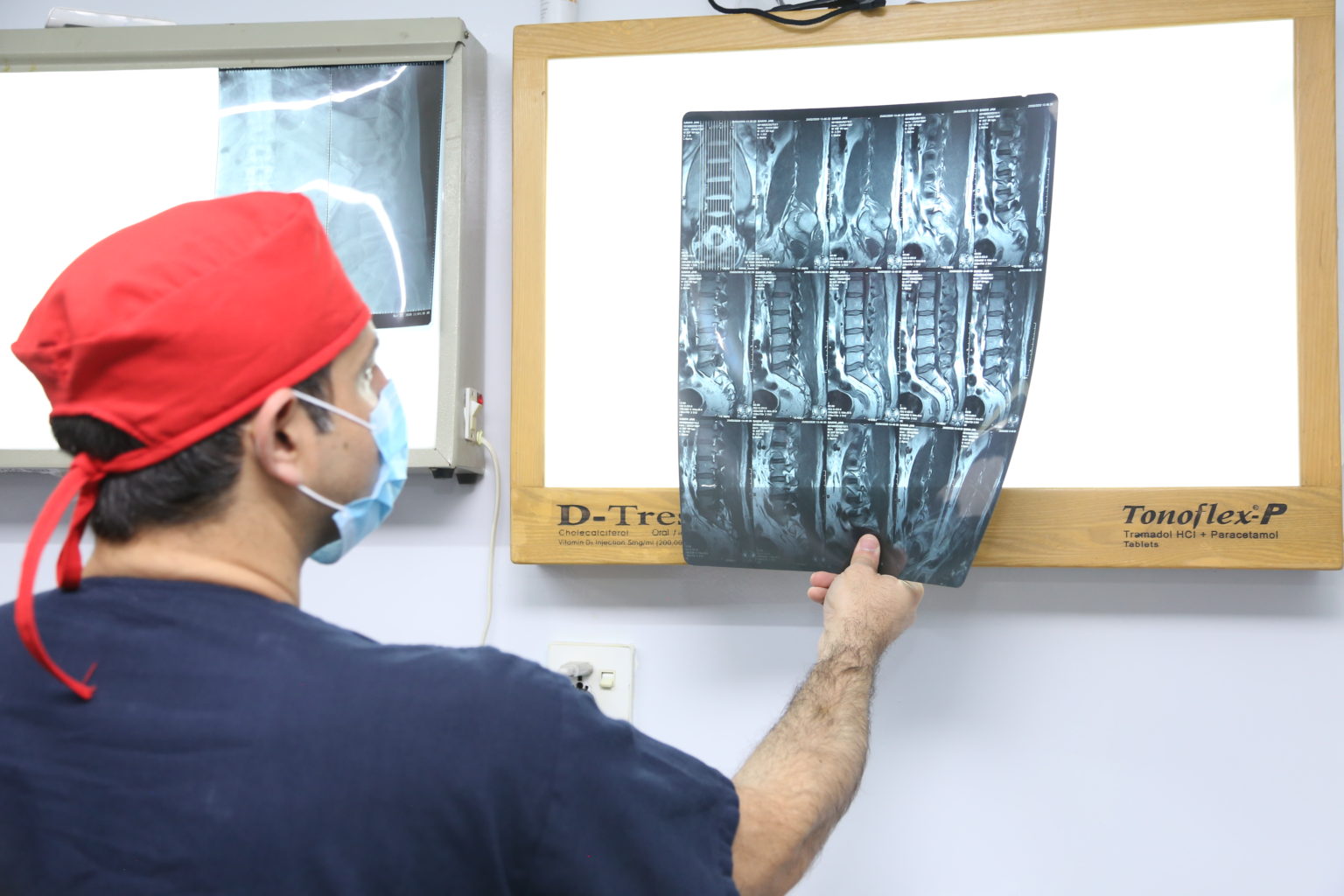
Diagnosis is based on a careful clinical assessment. Imaging is used where it is likely to help answer a specific question about your condition.
History
A detailed discussion of your symptoms, how and when they began, what makes them better or worse, and how they affect daily life.
Clinical Examination
Examination of the spine, posture, movement and, where relevant, nerve function such as strength, sensation and reflexes.
Imaging Where Appropriate
X-ray, MRI or CT may be requested when the findings suggest it would be useful. Not every patient needs a scan.
Discussion of Findings
Your findings are explained in clear terms, including what they mean and which options may be appropriate.
Care & Management
Treatment & Management
Management depends on how symptoms affect walking, daily activity and nerve function.
General Patient Information
Many people are managed without surgery at first. General approaches can include activity advice, physiotherapy and exercise, and medication for pain relief where appropriate.
Surgical treatment to relieve pressure on the nerves may be considered when symptoms are severe, progressive or significantly limit walking and daily life, or when there are signs of nerve compromise.
At the Clinic
Following assessment, your findings and the options appropriate to your situation will be discussed with you, and an individual treatment plan agreed.
Treatment is matched to how symptoms affect walking, function and daily life.
Spine Care · Peshawar

Specialist Care
Care With a Specialist Focus
Dr. Samir Kabir is an orthopedic and spine surgeon whose clinic is at Hayatabad Medical Complex, Peshawar.
His training includes nine years of surgical training and work in the United Kingdom, the FCPS in Orthopaedics & Trauma, and fellowship training in spine surgery.
MBBS · MRCS · MPH · FCPS Orthopaedics & Trauma
Spine Surgery Fellowship
Patient Guidance
When to Seek Specialist Care
Consider seeing a specialist if:
- Leg pain or heaviness limits how far you can walk
- You notice numbness, tingling or weakness
- Balance or coordination is getting worse
- Back or neck pain is persistent or worsening
Important Information
Some symptoms need urgent care
Seek urgent medical attention if you develop new numbness around the groin or buttocks, difficulty controlling your bladder or bowel, or rapidly worsening weakness in the legs. These symptoms need same-day emergency assessment.
This page provides general information and is not a substitute for a personal medical consultation.
Related Conditions
Other Spine Conditions
Questions
Frequently Asked Questions
General answers to common questions. Your own situation should always be discussed with a specialist.
Why does my leg pain improve when I sit down?
In lumbar stenosis, bending forward or sitting can slightly open the spinal canal, which often eases symptoms. This pattern is one of the features assessed clinically.
Is spinal stenosis part of ageing?
It is often related to age-related changes in the discs and joints, but not everyone with these changes develops symptoms.
Can it affect the neck?
Yes. Stenosis can occur in the neck (cervical spine) as well as the lower back, and the symptoms can differ.
Does spinal stenosis always need surgery?
No. Many people are managed without surgery. Surgery may be considered for severe or progressive symptoms.
How is it diagnosed?
Diagnosis is based on your history and examination, often with MRI to assess the spinal canal where appropriate.
Private Consultation
Discuss Your Condition With Dr. Samir Kabir
A specialist assessment can help clarify the cause of your symptoms and the options appropriate for you.
Clinic hours
Monday – Saturday · 4:00 PM – 8:30 PM
Hayatabad Medical Complex, Peshawar
Phone & WhatsApp